Field Audits
Comprehensive On-Site Inspections for Asset Integrity & Regulatory Compliance
RPS Inspections embeds certified auditors directly in your active operations — walking your equipment lines, reviewing control room documentation, and verifying physical conditions against your Inspection Data Sheets (IDS) and Process Safety Information (PSI).
Each audit is conducted against the standards governing your facility: API 510, API 570, API 653, ASME B31.3, OSHA 1910.119 PSM, and EPA RMP. Every deliverable follows a structured findings format — condition observed, Code reference at risk, consequence severity, and recommended corrective action with priority ranking.
Our Field Audits integrate directly with your Mechanical Integrity (MI) program, Turnaround (TA) planning cycles, and MOC workflows — providing Operations Managers and Compliance Officers with a defensible, third-party-verified snapshot of facility integrity ready for regulatory review, insurer scrutiny, and corporate risk functions.

Pipeline segment inspection in progress — RPS field auditors assess coating integrity, joint alignme
Compliance & Regulatory Reporting
Audit-Ready Documentation for OSHA PSM, EPA RMP & API Compliance
Regulatory compliance in oil and gas, petrochemical, and heavy manufacturing doesn't just require accurate documentation — it requires documentation that is audit-ready, structured to meet the specific evidentiary requirements of OSHA PSM (29 CFR 1910.119), EPA RMP (40 CFR Part 68), API RP 750, and the applicable ASME, API, AWS, NACE, and NFPA codes governing your equipment.
RPS Inspections authors and compiles the complete documentation package: Inspection Test Plans (ITPs), Mechanical Integrity (MI) program records, ASME U-stamp and National Board documentation, pressure test records, coating inspection logs, and regulatory submittal packages — all structured to the format expected by process safety auditors, OSHA compliance officers, and insurance risk engineers.
When your facility faces an OSHA PSM audit, insurer review, or internal corporate compliance inspection, your documentation tells a complete, defensible story — not a last-minute scramble.
Risk Assessment
API 580/581 Risk-Based Inspection to Prioritize Maintenance & Extend Asset Life
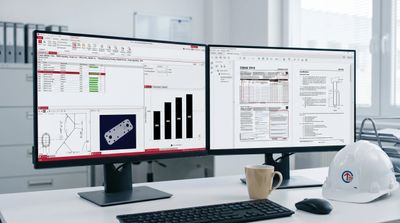
RPS Inspections' Risk Assessment service applies API 580 (Risk-Based Inspection) and API 581 (Risk-Based Inspection Technology) to systematically quantify the probability of failure (POF) and consequence of failure (COF) for pressure-containing equipment, piping circuits, storage tanks, and structural systems.
Our assessors identify and characterize active damage mechanisms on each asset — HTHA, stress corrosion cracking (SCC), corrosion under insulation (CUI), flow-accelerated corrosion (FAC), sulfidation, pitting, and fatigue — using API RP 571 as the definitive reference. The output is a prioritized risk matrix assigning each asset a relative risk ranking, driving data-driven optimization of inspection intervals and fitness-for-service (FFS) screening.
Our risk assessments integrate directly with your PHA refresh cycles, Mechanical Integrity program, and Turnaround planning scope — ensuring every capital and maintenance decision is backed by credible, technically defensible hazard analysis data.
Shop Inspection
Vendor Oversight: Independent ASME & API Shop Inspections to Eliminate Supply Chain Vulnerabilities
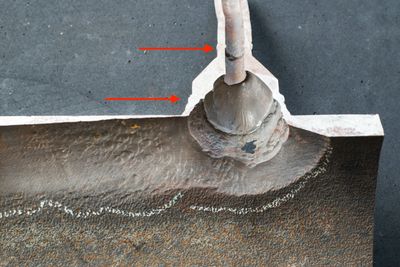
RPS Inspections' Shop Inspection service deploys credentialed third-party inspectors directly to manufacturing and fabrication facilities, pressure vessel shops, pipe fabrication yards, structural steel fabricators, heat exchanger manufacturers, and valve and rotating equipment OEMs, to perform Source Inspection and Vendor Surveillance on your behalf. Operating under your approved Inspection and Test Plan (ITP), our inspectors witness critical manufacturing milestones: raw material traceability and mill certification verification; dimensional and fit-up checks against approved drawings; weld procedure specification (WPS) compliance verification; NDE witness and result review (RT, UT, MT, PT); ASME Code stamping (U, UM, U2, R, S); hydrostatic and pneumatic pressure testing; and final dimensional and visual acceptance before release for shipment. All inspections are documented with timestamped photographic evidence, NCRs for nonconformances, and a final release report signed by the RPS inspector of record.
Equipment that leaves the shop with undiscovered dimensional nonconformances, substandard welds, or unverified material certifications becomes a costly problem on-site, during installation, commissioning, or, worst of all, in service. RPS Inspections' Shop Inspection service ensures that quality issues are identified and resolved at the point of manufacture, when correction costs are a fraction of those post-shipment. For procurement teams, project engineers, and quality assurance directors managing capital projects, our shop inspection program provides independent, real-time quality-control oversight that protects the integrity of your supply chain, eliminates surprises at equipment delivery, and provides a complete, auditable quality dossier for every inspected item. Our inspectors are fluent in ASME Section VIII, Section IX, B31.3, API 510, 570, 580, 650, AWS D1.1, and the fabrication standards applicable to your specific equipment category.

Welding Qualifications
Metallurgical Bonding: Expert Validation of Welding Procedures and Personnel Certifications
Welding is one of the most regulated and high-risk processes in pressure equipment fabrication and repair. RPS Inspections' Welding Qualifications service provides AWS Certified Welding Inspector (CWI)-led oversight of the full welder and welding procedure qualification cycle in accordance with ASME Section IX, AWS D1.1, AWS D1.6, API 1104, and other applicable codes. We witness Procedure Qualification Record (PQR) testing, including destructive and nondestructive examinations of test coupons, and author or review the resulting Welding Procedure Specifications (WPS) to ensure Code compliance and completeness of essential variables. For welder performance qualification (WPQ), our CWIs witness qualification tests, verify acceptance of test coupons through NDE and mechanical testing, and issue or audit qualification records that authorize welders for specific combinations of position, process, and material group. We also conduct comprehensive welding program audits to assess the overall health of your qualification documentation, welder continuity records, and procedure library.
Unqualified or improperly qualified welding procedures and personnel are a primary root cause of in-service weld failures, regulatory citations during OSHA PSM audits, and costly ASME Code nonconformances identified during third-party inspections. RPS Inspections' Welding Qualifications service provides project engineers, QA directors, and construction managers with a code-compliant, independently witnessed qualification record they can stand behind before an Authorized Inspector (AI), an OSHA compliance officer, or a client's quality assurance representative. Whether you are qualifying a new welding procedure for a high-alloy piping system, requalifying welders after a continuity lapse, or auditing an inherited welding program for a turnaround, our CWIs bring the technical depth and regulatory fluency to ensure your welding program withstands scrutiny.

Project Management
Turnaround Execution: End-to-End Quality Control and Inspection Test Plan (ITP) Managem
Complex inspection and quality-control programs, spanning multiple disciplines, contractors, facilities, and regulatory frameworks, require structured project management to deliver on time, within budget, and with complete documentation. RPS Inspections' Project Management service provides end-to-end oversight of your inspection and compliance workflows: scope definition, Inspection and Test Plan (ITP) development, inspector mobilization scheduling, subcontractor coordination, progress tracking against project milestones, nonconformance management, and final documentation package assembly. Our project managers are inspection-industry professionals, not generalist PMs, who understand the technical requirements of API-, ASME-, and AWS-governed inspection programs and can make real-time decisions in the field without delays from escalation. We manage the inspection scope for capital projects, turnarounds, new construction QA/QC, and ongoing mechanical integrity programs for clients who need a reliable third party to own quality-control execution from start to finish.
The cost of inspection project mismanagement rarely ends with inspection budget overruns; schedule delays cascade into contractor demobilization costs, deferred startup revenue, and regulatory exposure from incomplete documentation packages. RPS Inspections' Project Management service eliminates those risks by embedding a qualified inspection project manager accountable for scope delivery, compliance with quality-control standards, and documentation completeness from day one through project closeout. Our PMs maintain real-time visibility into inspection progress, NCR status, and documentation gaps, providing clients with regular written status reports and flagging calls when schedule or quality risks emerge. For operations managers and project engineers juggling multiple workstreams, RPS Inspections' project management function is the quality-control anchor that keeps inspection scope from becoming the project's critical path.

Upstream Inspection
Unyielding API 4G and Well-Control Inspections for Upstream Environment
Upstream oil and gas operations encompass some of the harshest and most safety-critical equipment environments in the energy sector. RPS Inspections' Upstream Inspection service provides comprehensive third-party inspection of onshore exploration and production infrastructure: land drilling rigs (derrick structures, draw-works, BOP stacks, and rotary tables, inspected to API 4F and API 16A standards); wellhead equipment and Christmas trees (API 6A); production vessels and separators (API 510, ASME Section VIII); high-pressure production flowlines and gathering pipelines (API 570, ASME B31.3/B31.4/B31.8); and associated processing and treating equipment. Our inspectors are familiar with the specific corrosion damage mechanisms active in upstream environments, CO2 corrosion, H2S-induced SSC and SOHIC, erosion-corrosion in multiphase flow, and microbiologically influenced corrosion (MIC), and recommend the appropriate NDE methods (UT, MT, PT, PAUT, and intelligent pigging data review) to characterize remaining useful life.
In upstream production operations, equipment failure directly leads to deferred production, well-control risk, and potential environmental releases, with significant regulatory and financial consequences. RPS Inspections' Upstream Inspection service provides exploration and production operators, EPC contractors, and lease operating companies with a credentialed, independent quality gate across all phases of upstream operations, from new-well construction QA/QC to ongoing mechanical integrity program support. Our inspectors understand API RP 14C, API RP 14E, and the BSEE/BSAI regulatory requirements applicable to onshore production facilities. They can support routine compliance inspections and targeted fitness-for-service assessments when production anomalies or integrity concerns arise. By maintaining continuous third-party oversight of your upstream asset integrity, RPS Inspections helps protect production continuity, workforce safety, and your operator's regulatory standing.
Midstream Inspection
Uninterrupted Transit: Advanced In-Line and Non-Intrusive for Midstream Pipeline Integrity
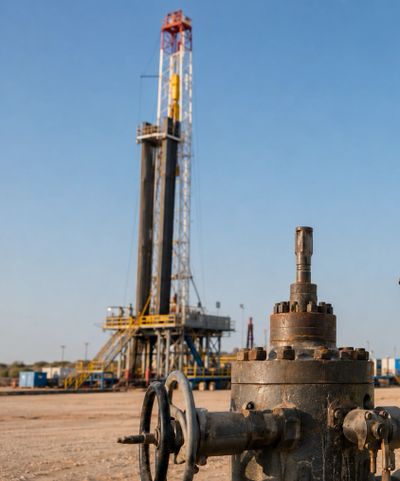
Midstream infrastructure, pipelines, pump and compressor stations, metering facilities, pig launchers and receivers, and aboveground storage terminals, must maintain continuous, leak-free operation under demanding pressure and throughput conditions while meeting stringent regulatory requirements from DOT PHMSA (49 CFR Parts 192 and 195), EPA Subpart W, and OSHA PSM. RPS Inspections' Midstream Inspection service applies the API 570 (piping inspection) and API 653 (aboveground storage tank inspection) frameworks, supplemented by inline inspection (ILI) data review, above-grade and buried pipeline integrity assessments, cathodic protection system evaluation, and corrosion coupon program oversight to provide a complete picture of your pipeline and storage infrastructure's integrity. Our inspectors assess corrosion defects, mechanical damage, SCC colonies, girth-weld anomalies, and coating breakdown, and direct assessment methods in accordance with ASME B31.8S and ASME B31.4.
For pipeline operators and midstream terminal managers, the consequences of a missed integrity anomaly extend beyond repair costs; it can lead to a significant release, a PHMSA enforcement action, a mandatory flow restriction, or a consent order with years of regulatory oversight. RPS Inspections' Midstream Inspection service provides the independent, technically credentialed integrity assessment that pipeline and terminal operators need to satisfy PHMSA Integrity Management Program (IMP) requirements, demonstrate due diligence to insurers, and make confident re-inspection interval decisions. Our inspectors work within your existing IMP documentation framework, delivering findings formatted for direct integration into your threat identification and risk assessment (TIRA) process and anomaly management procedure. From routine API 653 tank shell and floor inspections to emergency integrity assessments following an overpressure event, RPS Inspections delivers the midstream inspection capability your operations demand.

Downstream Inspection
Maximizing Refinery Throughput: API 579 Fitness-For-Service Assessments in High-Stress Downstream Fa
Downstream refinery and petrochemical processing environments present some of the most complex and demanding inspection challenges in the industrial sector: high-temperature hydrogen service (HTHA) zones, amine treating units, alkylation units, catalytic cracker regenerators, fired heater tubes, heat exchanger bundles, and an extensive array of pressure vessels and process piping operating across a wide range of temperatures, pressures, and corrosive process streams. RPS Inspections' Downstream Inspection service delivers API 510 (pressure vessel), API 570 (piping), and API 653 (atmospheric storage) inspections, all performed by inspectors with corrosion engineering expertise to correctly interpret findings in the context of the active damage mechanisms in each refinery unit.
Unplanned downtime in a refinery or petrochemical plant is among the costliest operational events in the energy sector; a single unexpected unit shutdown can cost tens of millions of dollars in lost margin, restart costs, and market position. RPS Inspections' Downstream Inspection service is designed to maximize the reliability and integrity intelligence of your fixed equipment program: identifying and developing damage before it reaches a threshold, supporting run/repair/replace decisions with technically defensible data, and ensuring that your turnaround inspection scope captures the highest-risk items while minimizing unnecessary equipment openings. Our downstream inspectors are conversant with API RP 571 damage mechanisms, API 579 Fitness-for-Service methodology, and the inspection program requirements of API RP 510, 570, and 653, bringing the technical depth needed to support your inspection engineers and reliability teams in complex integrity decisions.
Offshore Inspection
Deepwater Asset Protection Inspections
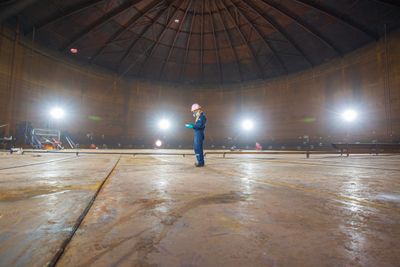
Offshore production platforms, floating production, storage, and offloading (FPSO) vessels, jackup and semi-submersible drilling rigs, subsea pipeline risers, and marine terminal structures operate in an environment marked by continuous salt spray exposure, wave loading, biofouling, accelerated external corrosion, and the constant operational demands of remote, personnel-intensive facilities. RPS Inspections' Offshore Inspection service provides API 510, API 570, and API 653 pressure equipment and storage inspections; structural steel and topside inspections per ISO 19902 and API RP 2A; AMPP CIP-certified coating inspections for protective coating systems critical to long-term corrosion control; marine riser and conductor inspections; and visual and NDE assessments of crane structures, helidecks, and life safety systems per applicable SOLAS, ABS, DNV GL, and BSEE/BSAI standards. Our offshore inspectors are medically certified, BOSIET-trained, and experienced in the logistical and hazard-management demands of operating in an offshore environment.
The cost of offshore equipment failure extends far beyond asset damage; it encompasses well-control risk, potential personnel casualties, regulatory shutdown orders, and the reputational consequences of an environmental release in a high-visibility operating environment. RPS Inspections' Offshore Inspection service provides production operators, drilling contractors, and EPC firms with a credentialed, offshore-experienced inspection partner capable of delivering rigorous integrity assessments in environments where execution quality cannot be compromised by logistical challenges. Our offshore inspection programs are designed to minimize platform personnel time while maximizing the integrity data recovered, supporting both routine BSEE compliance inspection cycles and targeted anomaly investigations following corrosion survey findings, in-service incidents, or storm damage events. Whether your requirement is a single mobilization for a critical pressure vessel inspection or a multi-disciplinary offshore inspection campaign, RPS Inspections brings the credentials, safety culture, and technical capability the offshore environment demands.

Structural Inspection
Foundation to Flare Boom: Holistic Structural Integrity Assessments for Massive Industrial Framework
Industrial structures—pipe racks, equipment supports, pressure vessel skids, flare stacks, cooling towers, crane structures, building frameworks, marine fenders, and foundation systems—are the load-bearing backbone of your facility. Their degradation is often less visible than corrosion in pressure equipment, but undetected deterioration can have catastrophic consequences for structural integrity. RPS Inspections' Structural Inspection service provides systematic integrity assessments of load-bearing frameworks and foundations using visual weld inspection per AWS D1.1, evaluated against the design basis, applicable load standards (AISC 360, ASCE 7), and API RP 2A or ISO 19902 for offshore structures. Our inspectors assess corrosion loss in structural members, weld cracking in connections and high-stress locations, foundation settlement and anchor bolt integrity, and the adequacy of protective coating systems to ensure continued corrosion protection.
Structural failures in industrial settings carry consequences that extend well beyond repair costs: equipment loss, process release, personnel injury, facility-wide production curtailment, and cascading regulatory scrutiny. RPS Inspections' Structural Inspection service provides operations managers, facilities engineers, and reliability teams with independent, documented integrity assessments to make confident run/repair/replace decisions for aging structural systems, validate the structural adequacy of modified or repaired frameworks after a Management of Change (MOC) event, and maintain the inspection records required to demonstrate structural integrity management to insurers and regulators. Our inspections are documented in sufficient detail to support engineering fitness-for-service screening, remaining useful life estimation, and capital planning for structural rehabilitation, giving your organization the data it needs to manage structural risk as rigorously as it manages pressure equipment integrity.

Project Feasibility Studies
Rigorous Constructability and Process Design Feasibility for Industrial Mega-Projects
Before committing capital to an inspection program expansion, a mechanical integrity initiative, a facility modification, or a new construction project in a regulated environment, decision-makers need more than an intuitive assessment; they need technically rigorous, third-party-verified feasibility data. RPS Inspections' Project Feasibility Study service provides pre-project technical and logistical evaluations that assess inspection and quality-control requirements, applicable codes and regulatory frameworks, staffing and equipment needs, schedule constraints, and the risk profile of a proposed project before execution begins. Our feasibility assessors draw on direct field experience with API 510/570/653, ASME B31.3, AWS D1.1, OSHA PSM, and PHMSA regulatory frameworks to provide realistic, credible assessments of what a project will actually require—not an optimistic estimate shaped by the desire to win the work.
The most expensive mistakes in industrial project execution occur at the front end, when scope is underestimated, regulatory requirements are misunderstood, or inspection hold points are not properly integrated into the project schedule. RPS Inspections' Project Feasibility Studies eliminate those blind spots by establishing a factual, code-referenced technical basis for project go/no-go decisions, budget development, and resource planning before a single dollar of capital is committed to execution. Our feasibility reports include a summary of applicable regulatory and Code requirements, a preliminary inspection and test plan (ITP) framework, an estimate of required NDE and inspection resources, a schedule risk assessment, and identification of the critical quality-control hold points that will govern project execution. For capital project managers, procurement directors, and operations engineers responsible for project authorization decisions, an RPS Inspections feasibility study is the technical due diligence investment that prevents costly surprises downstream.
